

 Analysis by Gamescozy
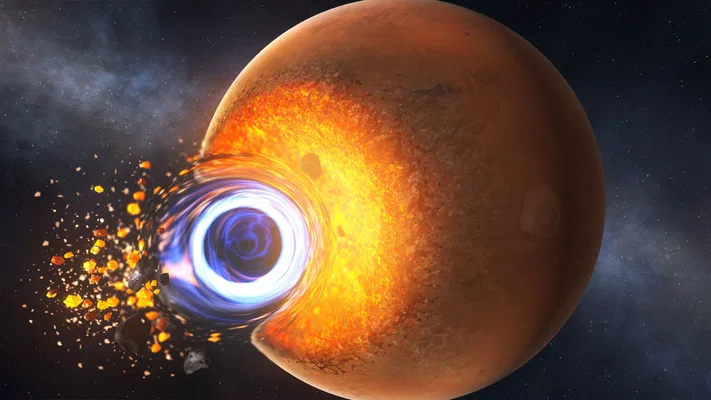
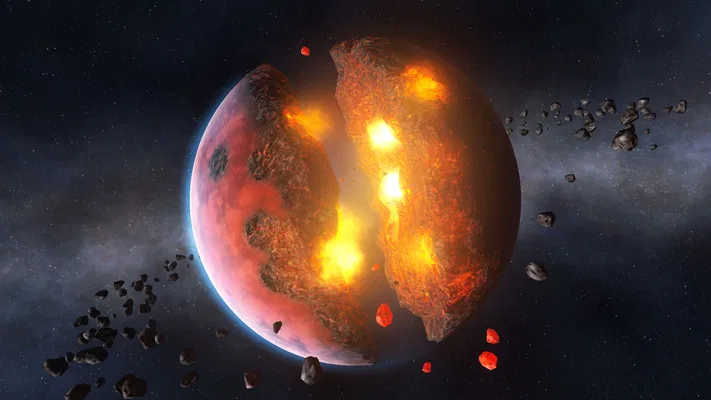
I enjoy simulation games most when they let me experiment without turning every session into a long checklist. Solar Smash takes that idea in an unusual direction: instead of building a city or managing a business, I get to treat a planet as a sandbox and see what happens when I unleash destruction on it. The appeal is immediate, but the game is more interesting when I approach it as a visual toy for testing ideas rather than a traditional challenge with a steady path of progress.
A planet-sized sandbox, not a conventional campaign
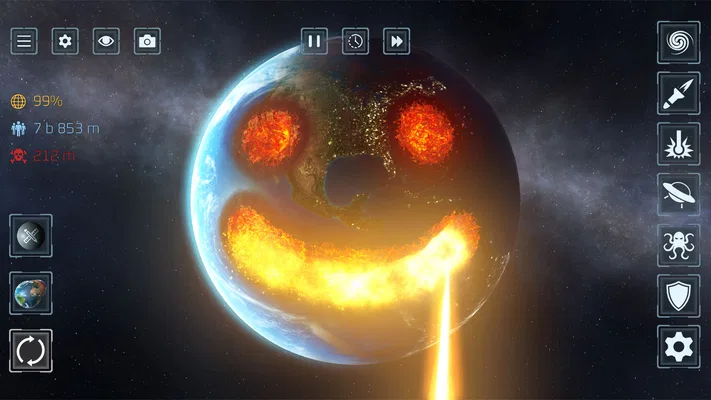
As a simulation game from Paradyme Games, this is built around hands-on experimentation. I can choose a planet, try different ways of affecting it, and watch the result unfold. That makes the basic loop easy to understand: pick a target, make something happen, then decide whether to repeat the experiment or try a different approach. There is no need to learn a complicated management system before the central attraction becomes clear.
That freedom also defines the main trade-off. Players who want a story, a carefully paced campaign, or a clear sequence of missions may find the experience loose. I don’t come here for a narrative that tells me what to do next. I come to test possibilities and enjoy the spectacle. If you like making your own goals, that open-ended structure is a strength; if you need objectives to keep a game moving, it may feel thin after the initial novelty.
The game is free to download, with in-app purchases listed from $1.99 to $14.99 per item. That gives curious players a straightforward way to try the core experience before deciding whether to spend. I would treat any purchase as optional until I know that the game’s style suits me. The listed range alone does not tell me what each item contains or whether it changes progression, so I wouldn’t assume that paying is necessary to enjoy the basic premise.
Its Everyone 10+ content rating is also useful context for households deciding whether the subject matter fits. The theme is planetary destruction, so it is not the same kind of gentle simulation as tending a garden or arranging a room. I’d consider both the game’s destructive premise and the child’s comfort with that imagery rather than relying on the genre label alone.
What makes the experiments satisfying
The strongest moments come from comparing outcomes. Instead of treating each session as a score chase, I can form a small question: what happens if I use a different approach, target another area, or change the order of my actions? That mindset gives the sandbox more staying power. The useful habit is to make one change at a time; when I alter several things between attempts, it becomes harder to tell what produced the result I liked.
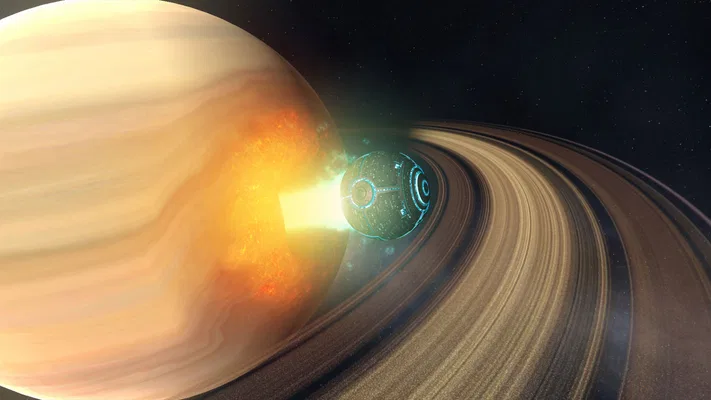
A second practical tip is to save the most visually striking experiments for when I can give the screen my attention. The appeal depends heavily on watching a planet change, so a quick glance while multitasking can make the game feel less rewarding than it is. In a short break, I’d pick one clear idea and follow it through instead of tapping rapidly through a string of unrelated actions. That turns a brief session into a little experiment rather than a blur of effects.
There is also a creative use for the game beyond simply seeing how much destruction I can cause. I can use it as a prompt for imagined scenarios: choose a planet, decide on a fictional cause, and see whether the visual result matches the scene in my head. That won’t appeal to everyone, but it gives the sandbox a playful role for people who like world-building or visual storytelling without wanting a full editor or a lengthy creative project.
How it fits into everyday play
For a realistic everyday scenario, I’d reach for it during a short wait when I want something interactive but don’t have the attention for a long match or a campaign mission. I can start with a simple experiment, watch the result, and stop when I’m ready. It works best when I’m comfortable making my own fun; it is less suitable if I need the game to give me a precise task and a satisfying completion screen every time I open it.
Compared with the usual alternatives in simulation, Solar Smash is less about maintaining systems and more about observing cause and effect. A city-building simulation asks me to balance needs over time; a management game makes planning and resource decisions central. This game instead puts the planet and the immediate visual result at the center. That makes it easier to dip into, but it also means players seeking intricate economies, long-term development, or detailed construction should look elsewhere.
It can also sit beside action games, though it offers a different kind of satisfaction. There is no need to frame it as a contest of reflexes: its appeal is experimentation and spectacle, not the pressure of beating another player. If I want a demanding challenge, a competitive game is likely a better fit. If I want a low-commitment sandbox where I can try an idea and see a dramatic consequence, this is the more natural choice.
Spending, progress, and fairness
The purchase information gives a clear price range for optional in-app items, but it does not establish what those items do, how progression works, or whether any purchase affects competitive balance. I therefore wouldn’t describe the game as pay-to-win or claim that spending is required. The most sensible approach is to play first, decide whether the core loop holds my interest, and only then consider an item whose purpose is clearly explained in the app.
Competitive fairness is not a major reason I would choose this title. Its central draw is a personal sandbox experience, rather than a verified ranking ladder or head-to-head contest. That distinction matters: players who are worried about paid advantages in a multiplayer environment may be asking the wrong question for this kind of game. Still, I would not make claims about particular modes or purchase effects without clear in-game details. The available purchase range alone is not enough to judge those mechanics.
Progress pressure is another point worth weighing. The open-ended format can feel relaxing because I’m not being asked to follow a long task list, but the same looseness can leave me wondering what to do after I have tried the obvious experiments. I’d recommend setting a small personal goal—testing a particular sequence, comparing outcomes, or creating a scene—rather than waiting for a formal progression system to supply momentum. If that kind of self-directed play sounds like work instead of fun, a mission-based simulation will probably serve you better.
Who should try it, and who should pass
I’d recommend it to players who enjoy visual cause-and-effect, sandbox experimentation, and short sessions that can be shaped around their own curiosity. It may also suit someone who wants a playful change from simulations focused on careful growth and maintenance. The premise is easy to grasp, while the freedom to invent experiments gives the player room to decide what counts as a satisfying session.
I’d steer away from it if you want peaceful subject matter, a rich story, a clearly explained progression track, or detailed control over a complex simulated world. The destruction theme is the point, not a side element, and the open format will not magically become a structured campaign for players who prefer guided objectives. It is also not my first pick when I’m in the mood for strategic depth built around long-term consequences or for competition against other people.
One helpful way to decide is to ask whether watching an outcome is enough to entertain you. If you need each action to unlock a new stage or advance a character, you may run out of reasons to return. If you naturally start asking “what if I try this instead?”, the sandbox has a better chance of holding your attention. That distinction is more useful than judging it by the broad simulation label alone.
Scale, support, and practical expectations
The game has an average rating of 4.6 from around 1.7 million ratings, with roughly 40,000 written reviews, and it has passed 100 million installs. Those figures suggest a large audience, but they do not guarantee that its particular mix of spectacle and freedom will suit me. I see them as context for its reach, not as a substitute for deciding whether I enjoy open-ended destruction games.
It was released on January 19, 2020, and the current version is 2.7.5. The stated minimum operating system is Android 7.0, which is worth checking before downloading on an older device. For a game built around visual effects, I’d also pay attention to how comfortably it runs on my own phone or tablet; the version and minimum system requirement do not promise identical performance across devices.
The game is free, but the presence of paid items means families may want to review purchase settings before handing a device to a child. That is a practical precaution, not a claim that purchases are pushed or required. Since I can’t infer the contents or impact of individual items from their prices, I’d inspect each offer in context instead of buying based on the range alone.
My verdict on the experience
Solar Smash works best when I treat it as an interactive planetary playground rather than a conventional simulation with a campaign to finish. Its great strength is the freedom to create small experiments and watch the consequences; its main weakness is that players must supply their own reasons to keep playing. I find that a fair exchange when I’m in the mood for visual discovery, but not when I want carefully guided goals or deep systems to master.
Paradyme Games has made a premise that is easy to understand and distinct from the usual building-and-management approach. The free entry point makes it easy to test whether the central loop clicks, while the in-app purchase range is a reason to make deliberate choices rather than assume every item is essential. I would try it for brief, self-directed sessions and judge it by the experiments I actually enjoy, not by how long I can keep tapping.
My recommendation is selective but genuine: try it if you like sandbox play and can find fun in asking your own “what if?” questions. Skip it if you want peaceful simulation, a clear campaign, or a dependable sense of structured progress. For the right player, its planetary experiments are an easy way to turn a spare moment into a strange little visual lab; for everyone else, the lack of direction may become the very thing that ends the session.